
Airport English practice
Airport English is mostly about answering a few quick questions clearly at the check-in desk, often with people waiting behind you. This page gives you a sample check-in dialogue, phrases for bags and seats, and the mistakes learners make most often. Then you can rehearse the same scene out loud with Maya.
 Maya: Airline agentYou: Passenger
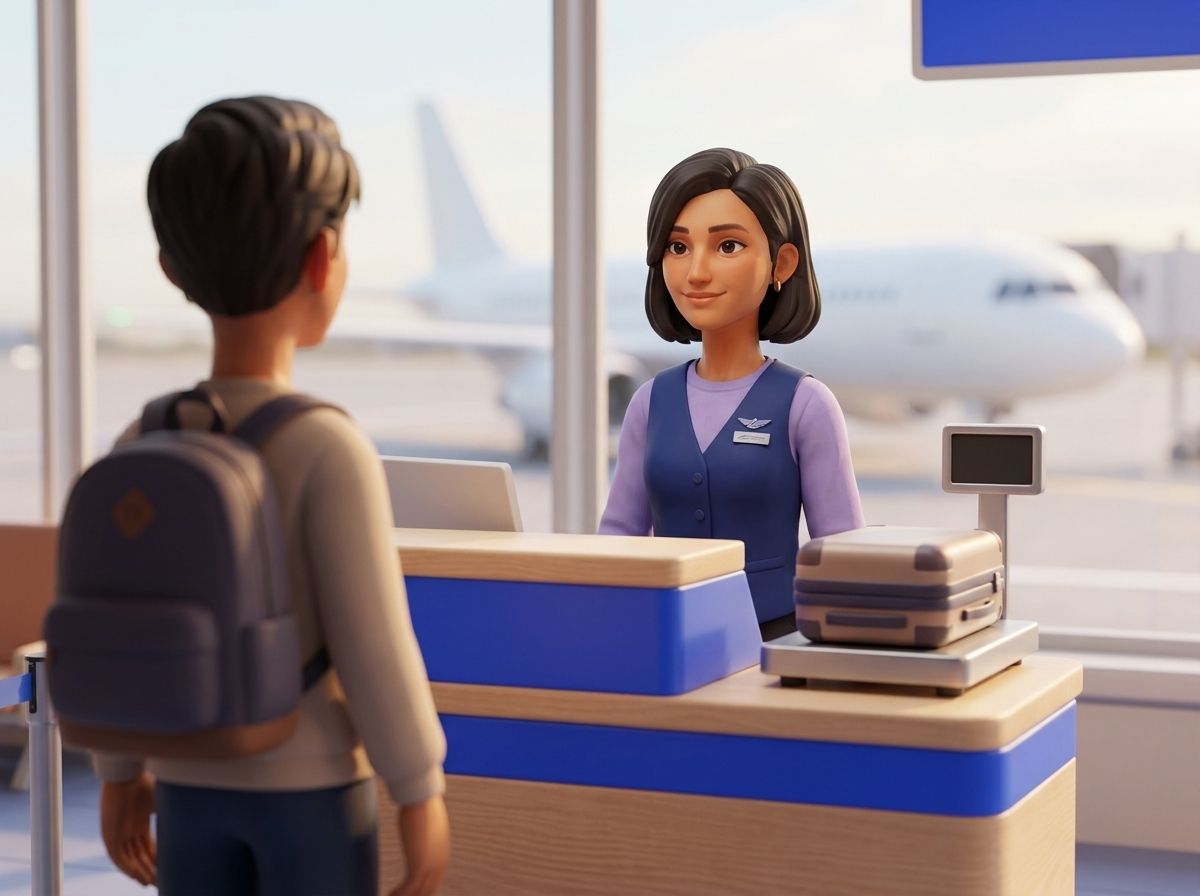
The scene
You are at the airport, checking in for your flight to London. Maya plays the airline agent: she asks for your passport, weighs your suitcase and prints your boarding pass. Your job is to check in for your flight, ask about the baggage allowance and request a window seat.
Your tasks in this scene
- Check in for your flight
- Ask about the baggage allowance
- Request a window seat
Sample dialogue
This is how the conversation flows with Maya. When you practice, you give your own answers; Maya stays in character, models the correct form in her replies and adds a quick tip now and then.
Maya· Airline agentGood morning. Where are you flying to today?
Good morning. I’d like to check in for my flight to London. Here’s my passport.
Thank you. The 10:40 flight, yes? Do you have any bags to check?
Yes, just this suitcase. What’s my baggage allowance on this ticket?
You can check one bag up to 23 kilos, and you can take one small bag on the plane.
Great. Is this backpack OK as hand luggage?
Yes, that’s fine. Could you put your suitcase on the belt, please?
Sure. Oh, and could I have a window seat, please?
Let me check… Yes, 14A is free. It’s a window seat near the front.
Perfect, thank you. What time does boarding start?
At 10:00, at gate B12. Here’s your boarding pass. Have a nice flight!
Thanks a lot. Have a good day!
Useful phrases
Common mistakes
I’d like to make check-in.
I’d like to check in.
“Check in” is a verb on its own. You don’t “make” it.
I have two baggages.
I have two bags.
“Baggage” and “luggage” are uncountable. To count, say “bags” or “pieces of luggage”.
My suitcase is 20 kilo.
My suitcase is 20 kilos.
After a number bigger than one, the unit takes a plural -s.
Can I take this bag in the plane?
Can I take this bag on the plane?
Use “on” for planes, trains and buses: “on the plane”.
My flight is at 10:40 o’clock.
My flight is at 10:40.
Use “o’clock” only with whole hours, like “ten o’clock”.
Tips
- Have your passport and booking code ready. Opening with “I’d like to check in for my flight to …” answers the agent’s first question before they ask it.
- Know the two types of bag: a “checked bag” goes in the hold; “hand luggage” or a “carry-on” comes on the plane with you. Limits depend on the airline and the ticket, so always ask.
- Ask for your seat before the agent prints your boarding pass. Window is “a window seat”; corridor is “an aisle seat”.
- Gate numbers and times come fast. If you are not sure, repeat them back: “Sorry, gate B12 at ten?”
Frequently asked questions
What does the airline agent ask at check-in?
Usually where you are flying to, for your passport and whether you have bags to check (“Where are you flying to?”, “Do you have any bags to check?”). At some airports you may also hear “Did you pack your bag yourself?” Short, clear answers are enough.
What is the difference between checked baggage and a carry-on?
Checked baggage is the suitcase you hand over at check-in; it travels in the hold. A carry-on (“hand luggage” in British English) is the bag you take on the plane. Weight and size limits for both depend on the airline and your ticket.
How do I ask for a window or aisle seat in English?
“Could I have a window seat, please?” or “Is there an aisle seat available?” works at any desk. If you are traveling with someone, ask “Could we sit together?”
How does airport check-in practice work in Speka?
Maya plays the airline agent and talks with you out loud. She expects you to check in for your flight, ask about the baggage allowance and request a window seat. After the call you get a summary with her corrections and new words.
What level do I need?
This scenario is designed for A2–B2 learners. If you can build basic sentences, you can start; Maya adjusts her pace and questions to your level.
More scenarios
All scenarios
Check in with your reservation, ask about breakfast, make a request.
Maya: Receptionist
Ask the way to the station, how long it takes, and repeat the directions.
Maya: Local
Introduce yourself, give an example of a strength, ask about the role.
Maya: Hiring managerRehearse this scene out loud with Maya
Reading is one thing, saying it is another. Maya plays the role, you speak, and afterwards you get a summary with corrections and new words.
Start with MayaRole-play scenes are part of Speka Premium. On the free plan you start with your weekly lesson.