
Returning an item in English
Returning an item in English means explaining a problem clearly and staying polite but firm when the answer is not what you hoped for. This page gives you a realistic return dialogue, phrases for refunds and exchanges, and the mistakes learners make most often. Then you can practice the same scene out loud with Maya.
 Maya: Shop assistantYou: Customer
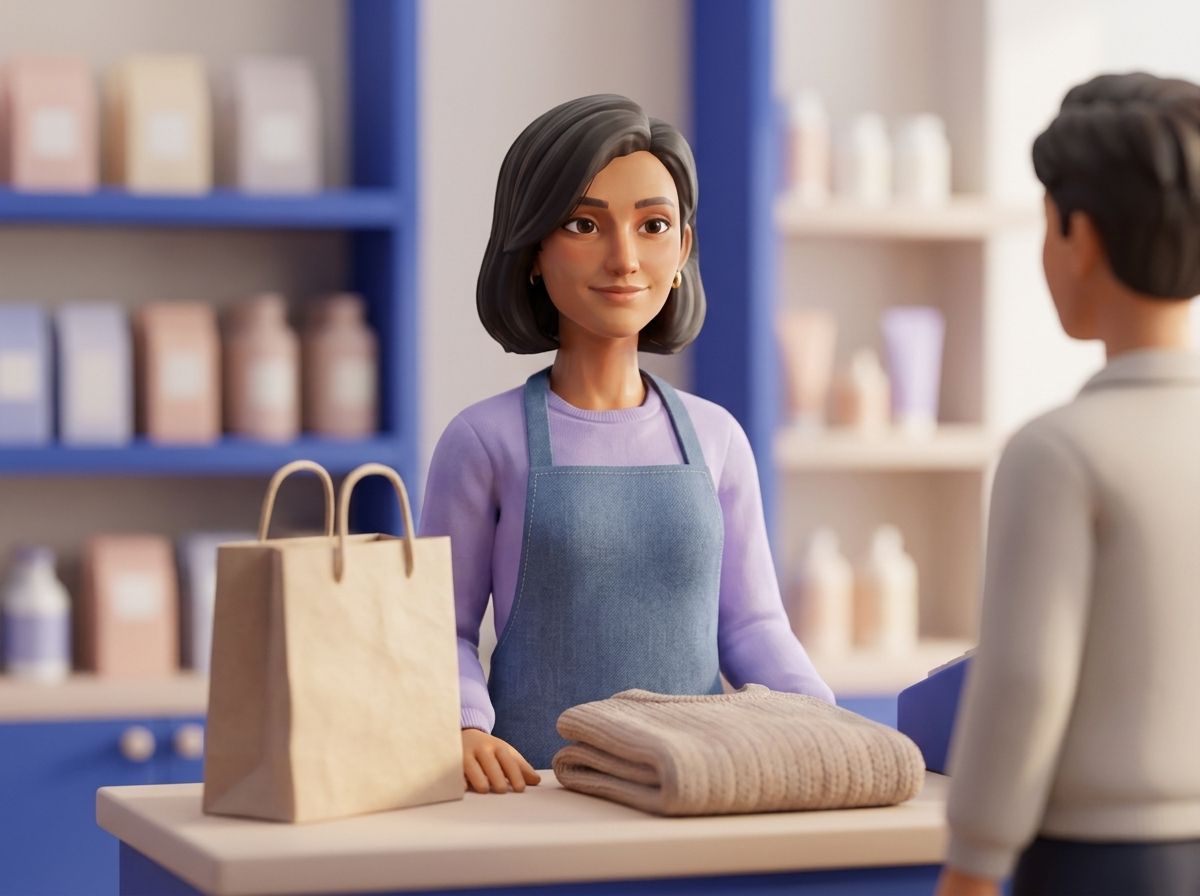
The scene
The zipper on a jacket you bought last week has broken, so you go back to the store with your receipt. Maya plays the shop assistant and asks how she can help. Explain what is wrong with the item, ask for a refund or an exchange and agree on a solution from the options she gives you.
Your tasks in this scene
- Explain what is wrong with the item
- Ask for a refund or an exchange
- Agree on a solution
Sample dialogue
This is how the conversation flows with Maya. When you practice, you give your own answers; Maya stays in character, models the correct form in her replies and adds a quick tip now and then.
Maya· Shop assistantHi there, how can I help you?
Hi. I bought this jacket here last week, but the zipper broke the second time I wore it.
Oh, I’m sorry to hear that. Can I take a look? And do you have the receipt?
Yes, here it is. As you can see, it doesn’t close at all now.
You’re right, that shouldn’t happen. What would you like us to do?
I’d like to exchange it for a new one in the same size, please. If that’s not possible, I’d like a refund.
Let me check. I’m afraid we don’t have a medium in stock right now. I can order one for you, but it will take about a week.
Hmm, I need a jacket for a trip this weekend, so I can’t really wait. Could I get a refund instead?
Of course. I can refund it to your card today. It usually takes three to five days to show up in your account.
That works for me. Let’s do the refund, then.
Great. Just tap the card you paid with here, please. OK, all done. Here’s your refund receipt.
Thank you so much for your help. I’ll keep this just in case.
Useful phrases
Common mistakes
I have bought it last week.
I bought it last week.
With a finished time like “last week” or “yesterday”, use the simple past, not the present perfect.
It doesn’t fit to me.
It doesn’t fit me.
“Fit” takes a direct object, so there is no “to”.
It is broken since Monday.
It’s been broken since Monday.
With “since”, use the present perfect for a situation that is still true.
Can I give back it?
Can I return it?
With phrasal verbs like “give back”, a pronoun goes in the middle (“give it back”). In a shop, “return” is the most natural verb anyway.
I want my money back.
Could I get a refund, please?
Not wrong grammatically, but it can sound angry as an opening line. A polite request usually gets a better result, and you can still be firm.
Tips
- Explain the problem first, then say what you want: “The zipper broke. I’d like a refund.” This order keeps the conversation clear.
- Bring the receipt or the card you paid with. It is usually the first thing the assistant asks for.
- If your first choice is not possible, ask “What are my options?” An exchange or store credit can also be a good result.
- Stay polite but firm. “I’m afraid …” and “Would it be possible to …?” let you push for what you want without sounding angry.
Frequently asked questions
What is the difference between a refund, an exchange and store credit?
A refund means you get your money back. An exchange means you swap the item for another one, such as a different size, a different color or a new one without the problem. Store credit is money you can only spend in that store.
What should I say if I don’t have the receipt?
Say “I don’t have the receipt, but I paid by card.” and show the card. Some stores can find the purchase that way; if not, they may offer an exchange or store credit.
How can I be polite but firm when I return something?
Describe the problem briefly and clearly, then make your request with “I’d like …” or “Could I …?” If the assistant offers something different, accept it with “That works for me” or ask “Is there any other option?”
How does shop return practice work in Speka?
Maya plays the shop assistant and talks with you out loud. She expects you to explain what is wrong with the item, ask for a refund or an exchange and agree on a solution. After the call you get a summary with her corrections and new words.
What level do I need?
This scenario is designed for A2–B2 learners. If you can build basic sentences, you can start; Maya adjusts her pace and questions to your level.
More scenarios
All scenarios
Order your coffee and a snack during the morning rush.
Maya: Barista
Get a recommendation, order with a special request, ask for the bill.
Maya: Waiter
Describe your symptoms, say how long you have had them, ask what to do.
Maya: DoctorRehearse this scene out loud with Maya
Reading is one thing, saying it is another. Maya plays the role, you speak, and afterwards you get a summary with corrections and new words.
Start with MayaRole-play scenes are part of Speka Premium. On the free plan you start with your weekly lesson.